We’re available to handle your pneumatic or hydraulic cylinder repair 24 hours a day, 365 days a year.
Profit-robbing breakdowns don’t always happen to your tie rod cylinders during business hours. That’s why Yates Industries is available 24 hours per day, 365 days per year to handle your repair. Our expert team provides:
Our repair facility is the largest and most comprehensive in the Midwest, offering 24/7 emergency service along with convenient pick-up and delivery options. Yates maintains an extensive inventory of components and materials to ensure your cylinder can be repaired quickly, even under tight deadlines. With decades of experience, we can repair and recondition virtually any make or model of hydraulic cylinder, including both standard and metric designs.
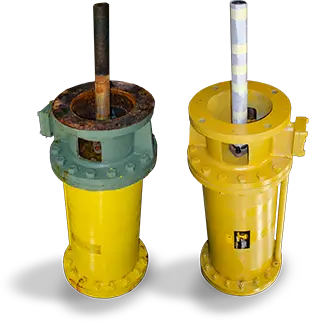
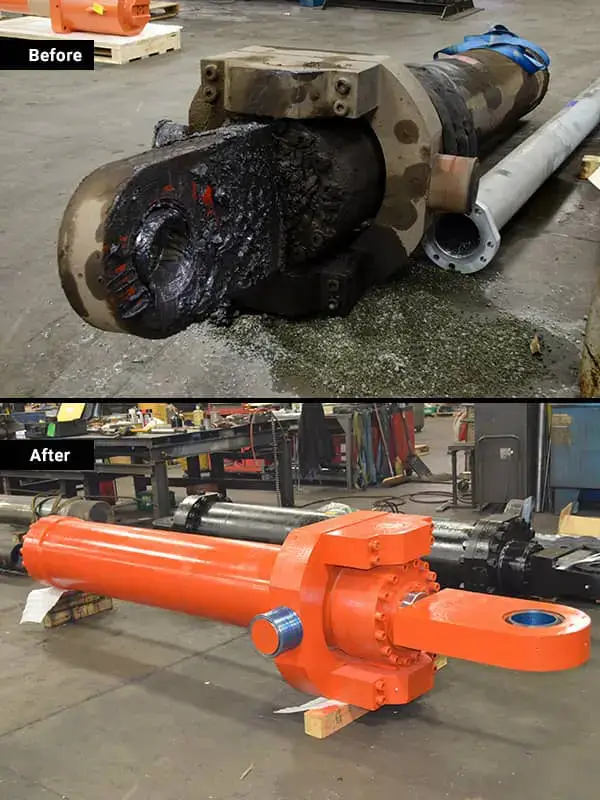


How long a tie rod cylinder repair takes depends on the specific issue, cylinder size, parts availability, and overall scope of work. However, tie rod cylinders are built to NFPA standard designs, which allow for easier disassembly and typically result in faster turnaround times compared to other cylinder styles.
Depending on your unique situation, repairs can take anywhere from a few days to several weeks or even months for more extensive damage or custom rebuilds. Contact our team to get a repair timeline tailored to your specific cylinder and application.
Determining the exact cause of a hydraulic cylinder failure requires a thorough disassembly and inspection by our team. Factors such as internal wear, contamination, improper pressure levels, damaged seals, misalignment, or component fatigue can all contribute to cylinder failure.
If you’re looking for a general overview of common causes and warning signs, read our blog post on diagnosing hydraulic cylinder issues.
Yes. When repaired properly, hydraulic cylinders can often perform like new. A quality repair process concludes with thorough testing that ensures the cylinder meets performance standards.
In many cases, repaired cylinders can return to reliable operation with the same performance and longevity expected from a new unit. The final results depend on the extent of the damage, the condition of the major components, and the quality of the repair process.
OEM standards refer to the specifications, quality requirements, and performance guidelines established by the Original Equipment Manufacturer (OEM). These standards ensure that components, materials, dimensions, and manufacturing processes meet the requirements needed for proper fit, function, reliability, and safety.
Tie rod cylinders are one of the most widely used cylinder designs within industrial equipment and manufacturing systems. They are constructed using high-strength steel tie rods that run the full length of the cylinder body, mechanically clamping the end caps to the cylinder barrel. This design allows the cylinder to be disassembled, serviced, and rebuilt without cutting or permanently modifying the housing.
They are commonly manufactured to National Fluid Power Association (NFPA) standards, which allows interchangeability between different OEMS, and simplifies replacement and repair processes.
Many tie rod cylinders are manufactured according to NFPA standards, which define consistent mounting dimensions, rod sizes, and performance specifications across manufacturers. This standardization allows for easier replacement and interchangeability across industrial systems.
During the repair process, maintaining these specifications is critical. Even small deviations can affect alignment, mounting compatibility, and system performance. For this reason, all dimensions are measured and verified throughout the rebuild process to ensure proper fit and function.
Tie rod cylinders rarely fail without warning signs. It’s important to recognize these signs before they lead to internal damage, increased downtime, and higher repair costs. The following are some of the most common indicators that your tie rod requires inspection and/or repair.
Hydraulic fluid leakage is one of the most visible signs that a tie rod cylinder is in the early stages of failure. While small amounts may seem minor, leaks typically signal that internal sealing surfaces have been compromised. Common causes include:
A bent cylinder rod can impact performance and lead to accelerated internal wear. Even a minor diversion can impact alignment, leading to uneven pressure inside the cylinder and damaging its components. Common causes include:
Seal failure is one of the most common causes of internal issues in tie rod cylinders, often leading to decreased performance down the line. Once seals begin to experience wear and tear, they can no longer maintain proper pressure between chambers. Common causes include:
Corrosion on rods or internal components can quickly impact cylinder wear and reduce sealing effectiveness. Once corrosion begins, it often spreads and creates rough services that damage seals and internal surfaces. Common causes include:
Every tie rod cylinder repair begins with a full inspection and analysis. This detailed analysis goes beyond surface damage, allowing our team to diagnose any potential underlying causes of failure. Components such as rods, barrels, pistons, seals, bearings, and tie rods are evaluated thoroughly for wear and contamination.
This step is critical in the repair process, as it ensures the root cause is addressed, rather than leaving the possibility for repeated failures.
Once inspection is complete, the cylinder is then fully disassembled, and all components are thoroughly cleaned. This removes any hydraulic fluid residue, debris, and contamination that could interrupt reassembly.
Cleaning also allows technicians to clearly identify wear patterns that indicate system issues such as misalignment and contamination.
Depending on the results of the inspection, components may undergo machining, restoration, or replacement. Rods can be polished or re-chromed; barrels may be honed to restore surface finish; and damaged threads or seal grooves can be repaired to return to their original condition.
Each repair is performed with strict attention to OEM specifications to ensure long-term reliability.
During reassembly, all components are realigned and reinstalled using proper torque specifications for tie rod and fastening systems. Proper torque is essential to maintaining structural integrity and preventing leakage or end cap movement during operation.
Before any cylinder is returned to service, it undergoes rigorous pressure testing to verify sealing performance, structural integrity, and smooth operation under load. This ensures the cylinder meets or exceeds OEM performance standards before leaving our facility.
In some cases, repairing a tie rod cylinder is not only cost-effective, but more practical than a full replacement. With their standard and serviceable design, tie rod cylinders are easily rebuildable—many failures can be corrected through machining, seal replacement, rod repair, and more—without needing an entirely new cylinder.
There are numerous situations where you may find that repair is the more viable solution. Some of these advantages may include:
Replacing a hydraulic cylinder can be expensive, especially when dealing with OEM units, custom dimensions, or large quantities. In many situations, the cylinder’s structural components are still usable. Repair may reduce the cost of:
When your cylinder isn't at max efficiency, neither is your operation. Unplanned downtime can quickly impact productivity, operating costs, or disrupt your production schedule. Rather than waiting for a replacement, your tie rod cylinder may be repairable with its existing components. This will help minimize:
Repairing a tie rod cylinder presents the opportunity for upgrades that go beyond its original configuration. During the rebuild process, upgraded materials can be installed to further improve durability, resistance, and performance. Common upgrades include:
Hydraulic cylinder failure can sneak up on you. At Yates, we prioritize fast response times and reliable repair support when emergency breakdowns occur. Our repair teams work efficiently to minimize downtime that harms your operation. Our capabilities include:
Unexpected failures can occur at any hour, especially in facilities that operate around the clock. Our emergency repair services are available 24 hours a day, 365 days a year to support critical equipment and reduce production interruptions. Call our 24/7 emergency hotline at (800) 340-6024.
Downtime is expensive. With in-house machining, emergency repair, and testing capabilities, we can streamline the repair process and avoid unnecessary delays.
To help simplify the process, we offer both coordinated pickup and delivery support.
With repair facilities in Michigan, Alabama, and Ohio, Yates can distribute workload efficiently and service customers throughout the nation.
Choosing the right repair partner is just as important as choosing the right cylinder. At Yates, we combine decades of hydraulic cylinder repair experience with in-house machining capabilities that provide dependable solutions. Some of our benefits include:
Yates is proud to be a leading manufacturer and rebuilder of hydraulic and pneumatic cylinders. With decades of experience, our team has worked on a wide range of tie rod cylinder designs, applications, and failure conditions.
All major repair operations are completed in-house, allowing us to maintain quality control and deliver faster turnaround times. Our machining capabilities support rod repair, barrel honing, thread restoration, and more.
Every cylinder repair is completed with close attention to OEM specifications. Throughout the repair process, up to final inspection, our goal is to restore each cylinder to meet—or exceed—its original performance.
Consult with our team for warranty details.