Heavy-Duty vs Light-Duty Hydraulic Cylinders: Key Differences & How to Choose
When you’re choosing the correct cylinder for your application, there is more to consider than the cost. Deciding between a heavy-duty hydraulic cylinder and a light-duty hydraulic cylinder ...
When you’re choosing the correct cylinder for your application, there is more to consider than the cost. Deciding between a heavy-duty hydraulic cylinder and a light-duty hydraulic cylinder is an important decision that directly impacts performance, reliability, and long-term operating expenses.
Not all hydraulic cylinders are built the same, and the conditions in which your cylinder will be operating are essential to consider. Using the wrong type can lead to premature failure, downtime, and expensive repairs. On the flip side, selecting the correct industrial hydraulic cylinder ensures your equipment operates efficiently, even in the most demanding environments.
In this guide, we’ll take a deeper look at the differences between heavy-duty vs light-duty hydraulic cylinders, their applications, and what steps to take to determine the best fit for your specific operation.
What Are Light-Duty Hydraulic Cylinders?
Light-duty hydraulic cylinders are designed for applications that operate under lower pressure and require less force. These hydraulic cylinders are typically used in environments where conditions are controlled, and workloads are moderate. They are best suited for occasional use rather than continuous operation, unlike heavy-duty hydraulic cylinders, which are designed for extreme stress and intense workloads.
Common Applications for Light-Duty Hydraulic Cylinders
Agricultural machinery
Light material handling equipment
Packaging and automation systems
Shop equipment and maintenance tools
Key Components of Light-Duty Hydraulic Cylinders
Lower pressure ratings
Smaller bore and rod sizes
Lightweight construction
Standardized designs
Lower upfront cost
Limitations of Light-Duty Hydraulic Cylinders
Reduced durability under heavier loads
Increased wear in high-cycle applications
Limited resistance in harsh environments
It’s important to note that while these cylinders are cost effective, they come with tradeoffs. You should not use a light-duty cylinder outside of its intended application, or you will shorten its lifespan significantly.
What Are Heavy-Duty Hydraulic Cylinders?
Heavy-duty hydraulic cylinders are built for strength, durability, and long-term performance in demanding environments. These industrial hydraulic cylinders are engineered to handle high pressures, heavy loads, and continuous operation.
Common Applications for Heavy-Duty Hydraulic Cylinders
Steel mills and metal processing
Mining and aggregate operations
Construction equipment
Marine and offshore environments
Presses and heavy manufacturing systems
Key Components of Heavy-Duty Hydraulic Cylinders
High-pressure capabilities
Thick-walled cylinder tubing
Larger diameter rods for added strength
Reinforced seals and wear bands
Custom-engineered designs
Resistance to shock loading and side loading
Heavy-Duty vs Light-Duty Hydraulic Cylinders: A Closer Comparison
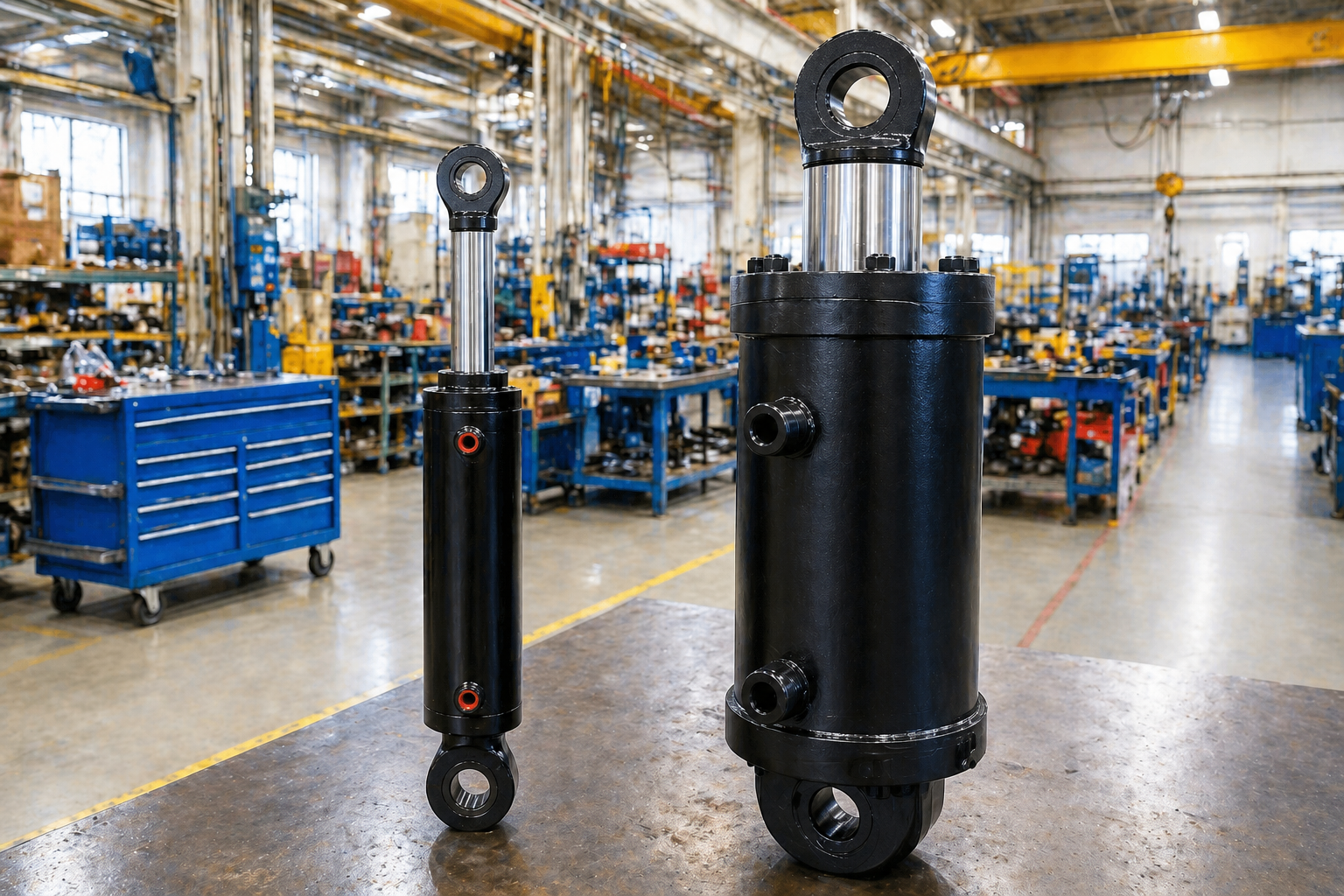
When comparing heavy-duty vs light-duty hydraulic cylinders, the differences go beyond size; they impact performance, longevity, and reliability.
Feature
Light-Duty
Heavy-Duty
Load Capacity
Moderate
High to extreme
Operating Pressure
Lower
High
Construction
Lightweight
Reinforced, heavy wall
Durability
Standard
Maximum
Environment
Clean, controlled
Harsh, demanding
Maintenance
Frequent
Less frequent (when properly specified)
How to Choose the Right Hydraulic Cylinder
Selecting the correct hydraulic cylinder comes down to understanding your application requirements.
Ask yourself:
What load will the hydraulic cylinder need to handle?
What is the operating pressure?
Will the cylinder run continuously or intermittently?
What environmental conditions will it face?
How critical is uptime for your operation?
If your application involves high loads, continuous use, or harsh conditions, a heavy-duty hydraulic cylinder is likely the best choice. For lighter, less demanding applications, a light-duty hydraulic cylinder may be sufficient.
Making the wrong choice between light-duty vs heavy-duty hydraulic cylinders can lead to costly consequences.
Choosing between heavy-duty hydraulic cylinders and light-duty hydraulic cylinders is only part of the equation—working with the right manufacturer can make all the difference.
At Yates Industries, we specialize in designing and manufacturing industrial hydraulic cylinders built to meet the specific demands of your application. Whether you need a standard replacement or a fully custom hydraulic cylinder, our team has the experience to deliver a solution that performs reliably in your environment.
If you’re unsure which type of hydraulic cylinder is right for your operation, we can help evaluate your requirements—including load, pressure, cycle demands, and operating conditions—to recommend the best fit. Contact us here.